The Consciously Method™: Your Path To Becoming a Brand Worthy of Trust™ and Attention

If you’ve spent time on this site, you’ve seen the Consciously Method referenced everywhere. It’s the core of who we are and why we work differently. It’s how we help companies stop claiming values and start being worthy, by design, not default.
What is it, exactly? Read on. We’ll be brief.
The goal has changed. So has the game.
For years, the ambition was to become a stakeholder brand: a company that recognized customers, communities, and employees as more than line items. That was necessary. It’s no longer sufficient.
In the Ecosystem Era, recognition isn’t the bar. Worthiness is. And the stakes are real. Business is now the most trusted institution, more trusted than government or media, which means the expectation to lead has never been higher. Stakeholders don’t reward the brands that talk about their values. They reward the brands whose values do commercial work, consistently, in every context they operate in.
So a clarification worth making plainly: stakeholder branding and stakeholder marketing are the disciplines. A Worthy Brand is what you become by practicing them well. One is the method; the other is the outcome.
This matters now because the funnel is broken. Buyers no longer move through a tidy sequence from awareness to purchase. They chart their own course across fragmented channels. Audiences move through ecosystems, not stages.
And too much growth is reckless. Spend more, launch more, acquire more, and hope coherence catches up. It rarely does. Companies grow by doing, not designing, and end up a pile of real things under one name that no stakeholder can read as a whole. Reckless growth isn’t a badge; it’s an operational liability. It’s spend. Intentional growth compounds, because every move is built on who you actually are. You can’t buy your way to worthiness. You have to build it, from the inside out.
Partners
Brand and marketing partners to organizations that need their values to do commercial work:
- Culture & Civic: Carnegie Hall · Bloomberg Philanthropies · Urban Institute
- Health & Science: Genentech · Rectangle Health · Lily Health
- Impact & Advocacy: Planned Parenthood · Ad Council
- Consumer & Retail: BLK & Bold · Tanger Outlets
- Enterprise & Tech: Radiant Logic · Digital.ai · Tempo.io
- Social Finance: Grameen · Nutmeg Bank · Flourish Ventures
It always starts inside: Connect Values to Value®
The method runs in one direction: inside out. Before you can be worthy to anyone else, you have to know who you are, what you make, and whether one is genuinely expressed in the other. That’s Connect Values to Value®, and it always comes first.
Then it carries through everything that follows: from your values to your value proposition, from there to what your ecosystem actually values, and finally into the places your stakeholders gather. NYU Stern’s Return on Sustainability Investment (ROSI™) work has spent years monetizing exactly this link between values-led practice and financial performance. Close the gap and values (not virtue) stop being wall art. They become an operating system.
The work unfolds in four movements: look inward, look outward, then Placemaking™, both internal and external. Each produces something the next can’t do without.
The order is the antidote to reckless growth. Most companies jump straight to the last movement, spending on marketing before they know who they are, where they’re worthy, or whether the organization can carry what they’re promising. We do it the other way around.
- Look inward: Connect Values to Value® (Service Design). What you stand for, what you make, and a business built to keep them start working as one. The result is alignment.
- Look outward: Category Design. Where you’re worthy, the strategy you can sustain, and the category you can lead. The result is resonance: what you stand for lands with what your ecosystem values.
- Internal Placemaking™: Brand & Marketing Ops. Your voice, team, workflows, tools, tech and creative, built for what you’re trying to do. The result is coherence.
- External Placemaking™: Ecosystem Marketing. Showing up where your stakeholders already are. The result is belonging.

Connect Values to Value always comes first; each part hands the next what it needs.
Part 1. Look inward: Connect Values to Value®
Service Design · What you stand for, what you make, and how.
Every engagement starts with the inward look. What do you stand for, and what values come from that? What do you make? And, more importantly, how do you make it?
In theory, the product is an expression of the brand. In practice, the product usually came first. Someone wanted to make something, solve a problem, do a thing, and the brand arrived later to describe it. So we ask the question most brand work skips: how is the thing you make an expression of your values? A product can work beautifully for customers and still fail to keep the brand’s promise while doing it.
That’s why this part is Service Design. Your product and service portfolio matters as much as your brand values, and designing the two together is where alignment comes from. What you say and what you deliver start reinforcing each other, and the work builds momentum instead of friction.
We also capture where you come from: the company’s history, its myths, the founding thinking that still shapes how decisions get made. All of it goes into the Brand Map, the human record of who you are. (Later it gets a machine-readable twin, the Brand Graph™. Different readers, same truth.)
Lock it in. Values only hold if the business is built to keep them. So this is also where we work through your Mission-Lock Infrastructure: strategy, business model, governance, culture and certification, much of it in workshops with your leadership. Values, not virtue, have to show up in how decisions get made and how the company is structured, or they won’t survive the first hard quarter.
You’ll know this part is done when you can name your values plainly, show how each one lives in what you offer, and tell a story every stakeholder can recognize themselves in.
“A theater with our history has to earn its next audience without walking away from the last one. Consciously helped us translate a storied legacy into a brand language that speaks to new generations of theatergoers, without losing what makes the Playhouse, the Playhouse.”
Kory Kelly, Chief Marketing & Communications Officer, Pasadena Playhouse
Deliverables: Brand Map (history, myths, foundational thinking), principles and philosophies, practical purpose and shared vision, values taxonomy and values style guide, product and service map, Values to Value Matrix (your portfolio plotted against your values), origin story, Mission-Lock Infrastructure (strategy, business model, governance, culture, certification strategy).
Part 2. Look outward: Category Design
Category Design · Where you’re worthy, and what you can lead.
With the inside clear, we look out at the ecosystem you operate in and the category you can credibly lead.
Map the ecosystem. Look and listen beyond your walls: the stakeholder groups, aligned communities and partners around you, what each one values, and where they gather. The idea has deep roots, back to James Moore’s original business-ecosystem thesis in Harvard Business Review.
Score your Trust Drivers™. The eight Brand Trust Drivers™ (Equity, Systems, Competency, Compass, Sustainability, Degrowth, Cultured and Place) are the dimensions stakeholders use, consciously or not, to judge whether a brand is worthy. We assess where you stand on each and where claim and conduct part ways. It echoes the Edelman Trust Barometer’s finding that people back institutions they judge both competent and ethical: worthiness is earned on several dimensions at once. Degrowth is on the list on purpose. Big impact, small footprint: execution without extraction or waste.
Read your Trust Context™. No brand leads on all eight. Your particular combination of drivers is your Trust Context™: the specific grounds on which you’re worthy, and so the categories, conversations and communities where you can credibly show up. You don’t pick your context. Your drivers earn it.
Choose your ecosystem strategy. There are four Ecosystem Marketing Strategies: Enabler (empowering others to lead), Participator (showing up and collaborating), Realizer (bringing values to life) and Orchestrator (aligning and activating the whole ecosystem). Which you can credibly play depends on your values, your capacity to engage and your drivers. So your Trust Drivers plus the strategies you can sustain become your ecosystem strategy: where to lead, where to support. A brand that claims Orchestrator when it can only sustain Participator gives up ground it never needed to lose.
Claim your category. Turn that strategy into a category position and narrative: the space you lead, and why you’re worthy to lead it.
The result is resonance. What you stand for lands with what your ecosystem actually values, and you get a clear view of where you belong in it.
Deliverables: ecosystem and stakeholder map, Community Personas™, Trust Driver assessment and scorecard (claim vs. conduct), Trust Context profile, Ecosystem Marketing Strategies assessment, ecosystem strategy, category position and narrative, competitive benchmarking.
Part 3. Internal Placemaking™: Brand & Marketing Ops
Brand & Marketing Ops · Get your house ready.
Knowing who you are and where you belong isn’t enough if the organization can’t carry it. Before you go to market, your team, workflows, tools, tech and creative have to be ready for what you’re trying to do. This is internal Placemaking™: preparing the place where the work actually happens.
Brand ops. Expression becomes a system rather than a string of guesses: identity, language ecosystem, messaging architecture and governance that steep your teams in what matters, so they can speak and execute in their own voices. We make explicit what must stay fixed (guardrails) and what can improvise in real time (flex nodes). Like jazz musicians, your people riff on the theme without losing it.
Marketing ops. The team, roles, workflows and processes that turn strategy into output, so the work runs the same way every time instead of depending on who’s in the room.
Tech. The systems your teams log into and query every day: the PolyBrand Suite™, including the Identity Canon™, the Brand Graph™ (the machine-readable twin of your Brand Map) and the Brand Asset Wallet™, plus AI enablement and the MarTech stack that will carry Part 4.
Creative. The creative system your teams build from (templates, toolkits and production workflows), so every asset starts on-brand instead of being corrected into it.
Built this way, your Trust Infrastructure™ stops being a binder of guidelines and becomes how the company runs. The result is coherence: recognizable to an employee, an investor, a community partner and a customer at the same time, on every channel, because the organization behind the brand works the way the brand says it does.
Deliverables:
- Brand ops: visual and verbal identity system, language ecosystem and glossary, writing style guide, messaging architecture, guardrails and flex nodes
- Marketing ops: team structure and roles, workflows and processes, approvals and reporting
- Tech: PolyBrand Suite™ (Identity Canon™, Brand Graph™, Brand Asset Wallet™), AI enablement, MarTech stack
- Creative: creative system, templates and toolkits, production workflows
Part 4. External Placemaking™: Ecosystem Marketing
Ecosystem Marketing · Show up where your stakeholders already are.
Only now is it time to go to market. And by now, marketing isn’t guesswork. You know who you are, where you’re worthy, which role you play and how to say it, and your team, tools and structure are built to carry it. This is external Placemaking™: we take the principles of traditional placemaking (shaping places with and for the people who use them) and build them into activations, content, digital experiences and partnerships across your ecosystem.
Ecosystem marketing replaces the broken funnel. Instead of pushing audiences through stages, we activate across channels inside the communities and relationships your brand needs to belong to, designing exchanges where everyone in them gains. It’s the logic of collective impact: large-scale change comes from coordinated ecosystems, not isolated actors. The goal is transformation, not optimization.
This is where the PolyBrand™ comes alive: one coherent brand operating across many contexts at once, held together by the Brand Graph™ you built in Part 3, so search and AI answer engines understand you the way your stakeholders do.
And we build in measurement on the metrics that matter, with regular reflection. Across the field, the bar for credibility is rising. The differentiator is no longer data; it’s trusted data. Worthiness has to stay true over time instead of decaying the moment the campaign ends.
“Environmental education only works when people see themselves in it. Consciously helped us communicate the science with clarity and credibility, meeting educators, students, and communities where they already are.”
Kim Noble, former Senior Advisor for Environmental Education, Office of Public Engagement and Environmental Education, U.S. Environmental Protection Agency (EPA)
Deliverables: stakeholder marketing strategy, multi-channel activation plan, touchpoint maps, aligned community and partner set, activations and experiences, content pillars and calendars, search and answer-engine strategy, sales enablement guides, measurement dashboards and reporting.
The outcome: a brand Worthy of Trust™ and Attention
Run the method and you don’t just have better guidelines. You have an offering that expresses your values (alignment), a position that lands with what your ecosystem values (resonance), an organization built to carry it (coherence), and a place in your ecosystem that was earned, not bought (belonging). You become worthy, and trust follows on its own. That’s the difference between reckless growth and intentional growth: one is spend; the other compounds.
Worthiness now pays twice. It’s what stakeholders reward, and increasingly what discovery rewards too. Search engines and AI answer engines surface the sources they judge credible, which is exactly what Google’s E-E-A-T framework measures, with trust as its most important signal. In this era, being worthy is the growth strategy.
What our partners say
“We built Plus Up to help families find a calmer, more connected home. As we grew, we needed a partner who understood both that purpose and the business behind it. Consciously delivered both, and every message now sounds like the parents we are.”
Adam Ashley, Founder & CEO, Plus Up
So much is changing out there: what people expect from companies, how they move through ecosystems, what earns their belief. Proving your values align with theirs isn’t a nice-to-have. It’s the work.
We’re here to help. Let’s chat.
About the author: Rai-mon Nemar Barnes is Founder & CEO of Consciously® and a Trustee of The Montclair Foundation.
Consciously® is a certified B Corp stakeholder branding and marketing agency and No. 35 on Inc.’s 2025 Regionals: Northeast.
More Insights
- Read the insight
What Is a Brand Knowledge Graph?

- Read the insight
What Does It Mean to Be a Worthy Brand?

- Read the insight
What Is Ecosystem Design?
- Read the insight
How connecting Values to Value drives reputation and revenue.

- Read the insight
B Corp Size Comparison Matrix
- Read the insight
Service Design is Worthiness That is Felt

- Read the insight
What is PolyIdentity? Applying Intersectionality to Business

- Read the insight
The Polybrand: How to Understand Brand In the Systems Era

- Read the insight
Our Value and Offerings to the world
- Read the insight
Privacy In Marketing: The Value In Living Out Your Values

- Read the insight
Ecosystem marketing: New Times, Require A New Kind Marketing

- Read the insight
Is the Marketing Funnel Broken? Ecosystem Design for CMOs and CEOs

- Read the insight
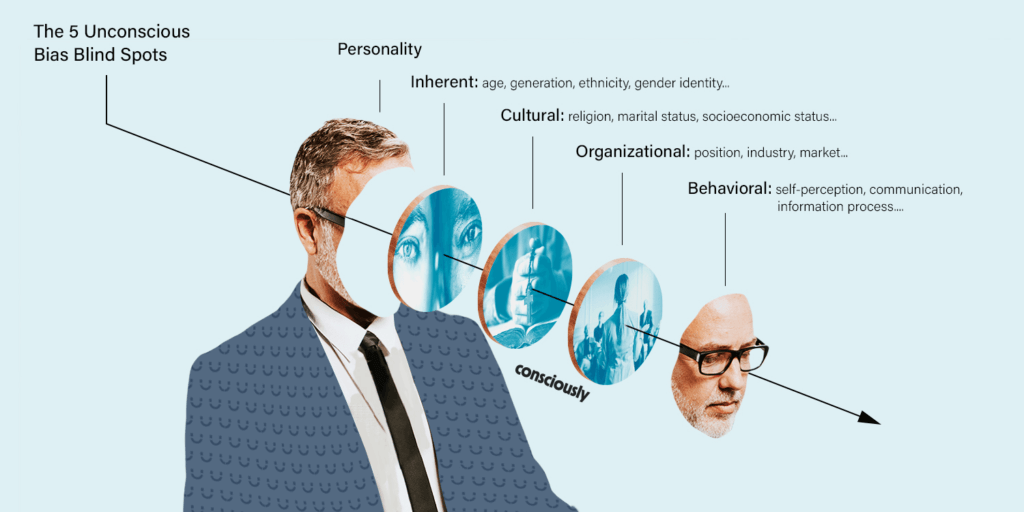
Demystifying Unconscious Bias for Marketers
- Read the insight
A Brand Marketers Guide to Diverse Brand Archetypes

- Read the insight
Brand Vocabulary and Glossary

- Read the insight
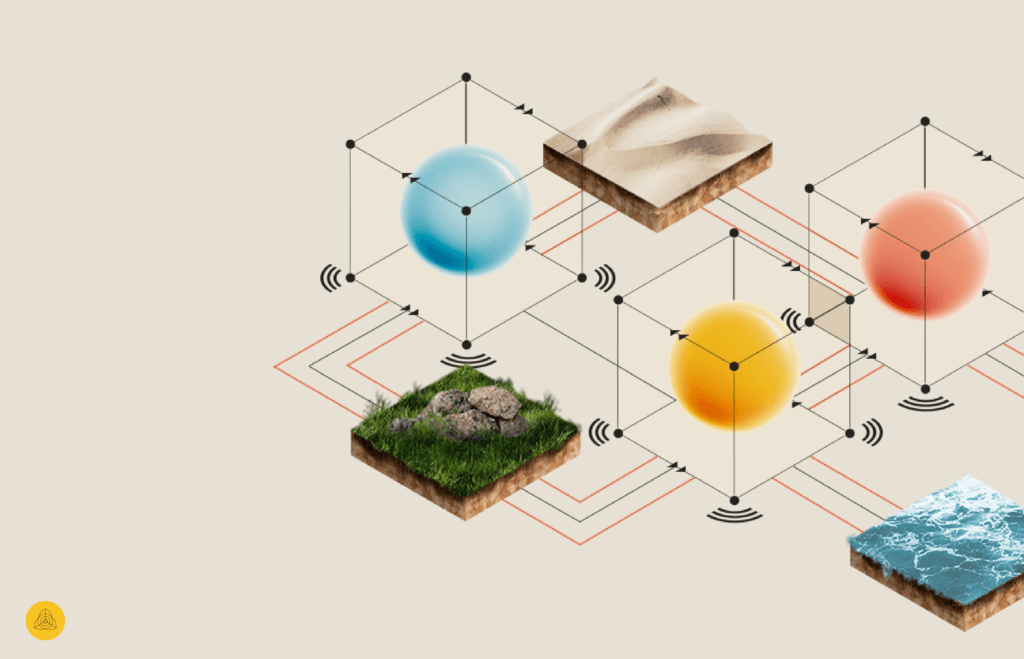
Ecosystems for better marketing
- Read the insight
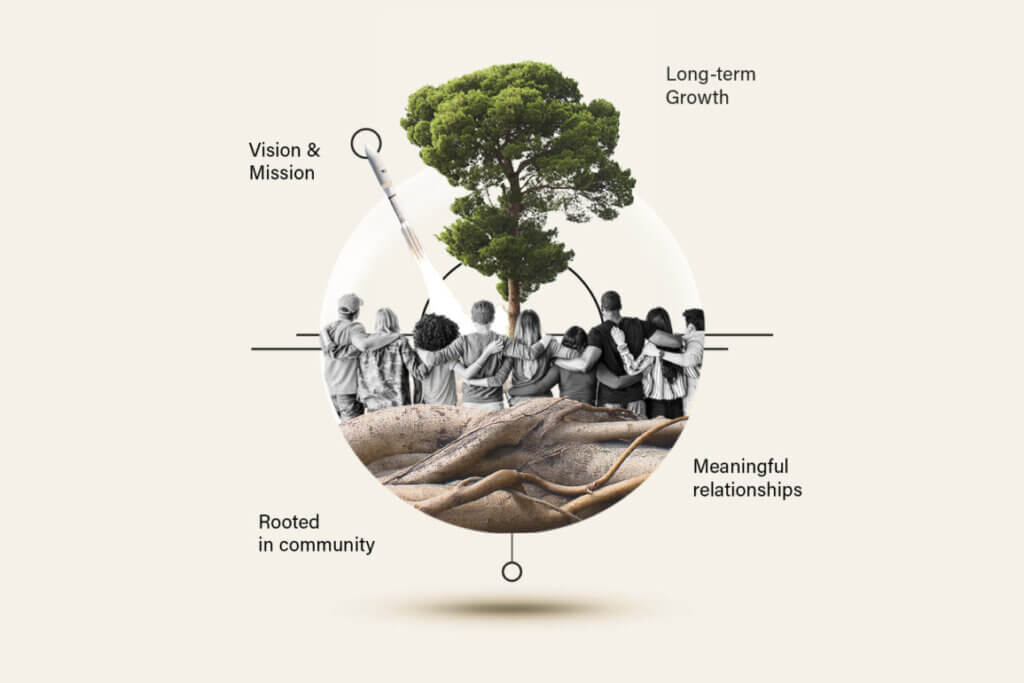
Brand Purpose to Help You Outrank Competitors
- Read the insight
What are Stakeholders in Marketing?

- Read the insight
Brand Archetypes (animations)

- Read the insight
Stakeholder Driven Business Glossary

- Read the insight
30 Ways to Be Worthy Audience Trust: Examples, types and definitions

- Read the insight
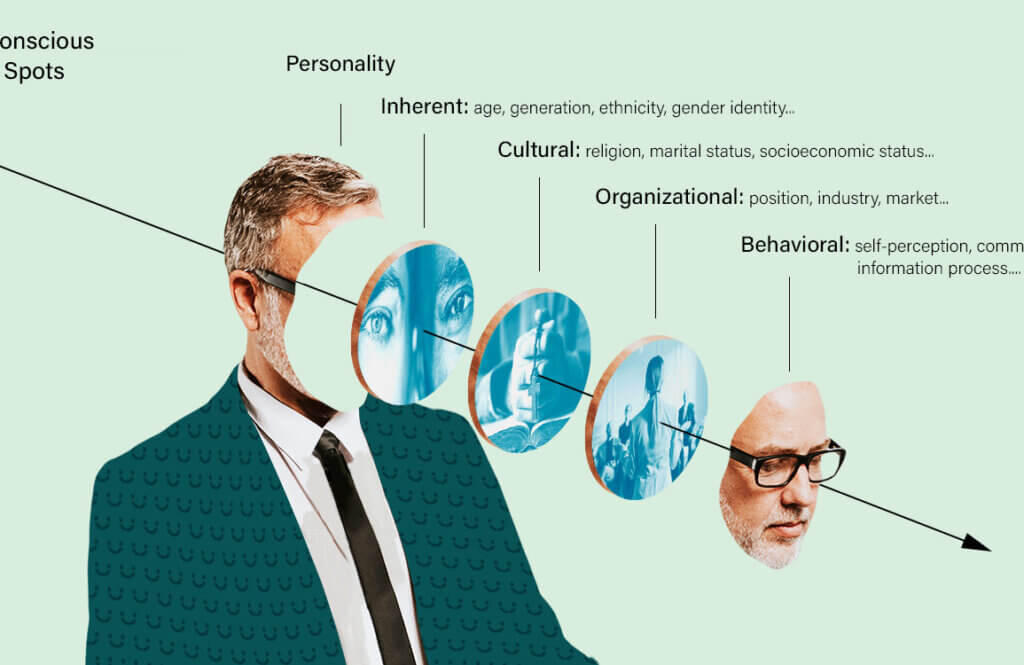
Demystifying Unconscious Bias for Marketers
- Read the insight
Ecosystem Design and the ecosystem roles you need to know for effective maps
- Read the insight
Replace Traditional Customer Personas with Audience Personas #bias

- Read the insight
What Is Stakeholder Marketing?
- Read the insight
The Start-up Founders Guide Certifications for Sustainability Focused Businesses

- Read the insight
What Is Behavioral Unconscious Bias?
- Read the insight
How to Mitigate Implicit and Explicit Bias in Your Marketing

- Read the insight
The Guide to Purpose-driven Certifications for Your Equality-Focused Businesses
- Read the insight
A Guide to Purpose-Driven Legal Business Entities Types

- Read the insight
How Unconscious Bias Effects Your Marketing Efforts
- Read the insight
How to Determine Your Business’ Tone of Voice
- Read the insight
Strategies are more valuable to purpose-driven businesses than plans.