B Corp Size Comparison Matrix
B Corp Company Sizes
Your B Corp just got a new size.
In November 2025, B Lab changed how it measures you. Here are the seven size bands, the single rule that decides which one you land in, and why the whole system is built this way — without the fine print.
Size has always shaped the B Corp assessment — smaller companies answer fewer, lighter questions; larger ones carry more. While yes the assement itself has changed, it’s how B Lab decides which size you are, and therefore which set of questions applies to you that’s also changed. And it’s not insignificant.
Two things are new. First, size now looks at both your headcount and your revenue, not headcount alone. Second, and this is the part most miss, when those two numbers point to different tiers, the smaller one wins.
The one rule to remember
The Lesser of Two
Find the tier your full-time-equivalent workers put you in. Find the tier your annual revenue (USD) puts you in. If they disagree, you take the lower of the two. That’s your size, and the requirements you’ll be held to follow from it.
and
$8M revenue → Small
The seven sizes of brands
B Lab Standards · V2.1
Read each row as a threshold. You qualify by meeting either the worker count or the revenue figure, then the Lesser-of-Two rule settles any tie.
| Size | # of workers (FTE) | Revenue (USD) | |
|---|---|---|---|
| XX Large | 10,000+ | or | >$1.5 billion |
| X Large | 1,000 – 9,999 | or | >$350M – <$1.5B |
| Large | 250 – 999 | or | >$75M – <$350M |
| Medium | 50 – 249 | or | >$10M – <$75M |
| Small | 10 – 49 | or | >$2M – <$10M |
| Micro | 1 – 9 | or | <$2 million |
| Company without workers | 0 | — | Not applicable |
Why it’s built this way
The standard didn’t get easier. It got fairer to measure.
Requirements scale with capacity
The whole model rests on one principle: what you’re asked to do should match what you can realistically resource. A Micro company and an XX Large enterprise don’t face the same bar. As you move up the bands, the sub-requirements grow in both number and rigor — the largest companies answer the most, and the hardest, questions.
Why the lower number wins
The old rule took the higher of your two figures. That routinely bumped companies into a tier heavier than their real operating capacity — especially SMEs and businesses in the Global South, who often run high headcount on modest revenue.
Switching to the lower figure corrects that mismatch. B Lab frames it as a change to how size is calculated — not to the requirements themselves. The bar is the same; the fit is better.
What “FTE” actually means
Full-Time Equivalent converts your whole workforce — part-time, seasonal, contract — into the equivalent number of full-time roles. Two half-time people count as one FTE. It’s a single, comparable number that treats every kind of worker equitably, rather than rewarding or penalizing a particular staffing model.
Size is one dial of three
Your assessment isn’t scoped by size alone. B Lab also tailors requirements by sector and, in some cases, industry — a service business with a light footprint carries different environmental sub-requirements than a manufacturer. Size sets the weight; sector and industry set the shape.
What this means for you
Check your band before you plan your recertification.
Around a quarter of the global B Corp community — roughly 2,500 companies — sits in a different size band under this rule than it did before, most of them moving down. A lower band can mean fewer requirements and lower verification cost. If you’re mapping a 2027 recertification, your size is the first variable to confirm, because your whole scope of work follows from it.
- Apr 8, 2025New B Lab standards (V2) published.
- Nov 2025“Lesser of Two” sizing takes effect (V2.1). Existing companies are re-scoped automatically in the B Impact platform.
- Feb 2026First companies begin verification on the new standard.
- Your moveConfirm your band, then scope the work that actually applies — not the work you assumed you’d carry.
—–
This is what the old tiers looked like.
| Dimension | Small Enterprise | Small-Medium Enterprise | Medium Enterprise | Large Enterprise |
|---|---|---|---|---|
| Initial Scoping | Not required | Optional contact with B Lab | Encouraged Discovery Phase | Mandatory Discovery/Scoping with B Lab |
| BIA Score Requirement | 80+ points | 80+ points | 80+ points | 80+ points with higher scrutiny |
| Legal Requirement Timing | Before certification (if <50 employees) | Within 2 years if >50 employees | Within 2 years if >50 employees | Complex multi-entity implementation |
| Transparency Obligation | Score only (basic public profile) | Score only (limited disclosure) | Score + limited BIA answers | Full BIA answer transparency (non-sensitive) |
| Disclosure Review | Standard Disclosure Questionnaire | Standard Disclosure Questionnaire | Disclosure + light due diligence | Enhanced: background + public scrutiny |
| Timeline Duration | 3–12 months | 6–24 months | 12–24+ months | 18–36+ months |
| Evaluation Depth | Basic review; limited structural complexity | Moderate (some structure review) | Expanded structure/track validation | Full structure, IBM, industry, legal review |
| Documentation Volume | Light (manual documentation possible) | Moderate (HR + suppliers) | Detailed (global HR, finance, supply) | Extensive (multi-site, global data) |
| B Team Structure | Often a team of one or shared roles | Core team with shared roles | Dedicated leads by function | Centralized program office + local champions |
| Internal Communication Strategy | Basic awareness-building; founder-led | Function-focused updates | Integrated across functions | Enterprise-wide strategy integration |
| Recertification Practice | Start 6 months ahead | Start 6–12 months ahead | Start 12–18 months ahead | Ongoing; use BIA as governance tool |
| Supply Chain Influence | Minimal; usually reactive not strategic | Some influence, growing | Established influence across vendor tiers | Global supply chain alignment standard |
| Use of B Corp Logo | Used across brand if same entity | May apply across brands if practices align | Subsidiary branding allowed if verified | Strict controls; branding per certified entity only |
More Insights
- Read the insight
Your Purpose Isn’t Enough: Manifest your values throughout your touchpoint

- Read the insight
What is PolyIdentity? Applying Intersectionality to Business

- Read the insight
The Polybrand: How to Understand Brand In the Systems Era

- Read the insight
Privacy In Marketing: The Value In Living Out Your Values

- Read the insight
Ecosystem marketing: New Times, Require A New Kind Marketing

- Read the insight
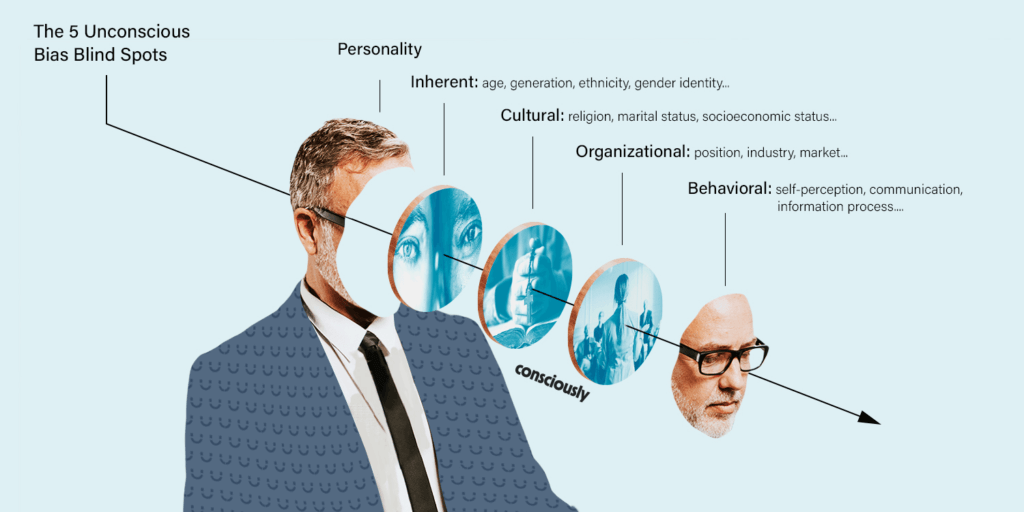
Demystifying Unconscious Bias for Marketers
- Read the insight
Brand Purpose to Help You Outrank Competitors
- Read the insight
Replace Traditional Customer Personas with Audience Personas #bias

- Read the insight
The Start-up Founders Guide Certifications for Sustainability Focused Businesses

- Read the insight
What Is Behavioral Unconscious Bias?
- Read the insight
How to Mitigate Implicit and Explicit Bias in Your Marketing

- Read the insight
The Guide to Purpose-driven Certifications for Your Equality-Focused Businesses
- Read the insight
A Guide to Purpose-Driven Legal Business Entities Types

- Read the insight
The 5 Unconscious Bias’ Every Stakeholder Brand™ Should Know
- Read the insight
Personality Unconscious Bias
- Read the insight
Visible Characteristics Unconscious Bias
- Read the insight
Organizational Unconscious Bias
- Read the insight
The Consciously Method™: Your Path To Becoming a Brand Worthy of Trust™ and Attention

- Read the insight
How Unconscious Bias Effects Your Marketing Efforts
- Read the insight
Unconscious Bias: It’s Time to Wake Up

- Read the insight
Strategies are more valuable to purpose-driven businesses than plans.