Services

category design

A brand that declares itself a category leader before it has earned the right to be trusted in that category is building on sand. The brands that endure — the ones that become synonymous with what a category means — get there by being genuinely the most credible option in the contexts that matter most to their stakeholders. That’s not positioning. That’s architecture.

Category Design at Consciously® is the practice of identifying, building, and owning the combination of trust contexts — including but not limited to your category — that makes your brand not just the obvious choice but the only logical one.

Most category design thinking starts with the market. Consciously® starts with trust.

Post-Acquisition Brand Unification as Agency of Record

Two Acquisitions. One Year. Millions of Jira Users Watching. · Brand Strategy During a Global Crisis · Agency of Record: Content, Branding, Social, and Brand Anthem · Three Entities. One Cohesive Brand.

Read our insights


Our Category Design Process Centers Trust

Trust Context™

Every brand earns trust in a specific context. Not in general. Not broadly. In the specific combination of who you serve, what you stand for, the category you operate in, and the moment your stakeholder needs you. Trust Context™ is how we define that combination — and how we build the positioning, proof, and signals that make it legible to the people who matter most.

Category + Context

Your category is one context among several. The most defensible brand positions are built at the intersection of multiple trust contexts — your category, your values, your stakeholder relationships, your certifications, and the ecosystems you belong to. We help you identify which combination of contexts makes you most worthy of trust, and most distinct from everyone else competing in the same space.

Ownership

Category ownership isn’t claimed — it’s demonstrated. We build the brand infrastructure, the content systems, and the ecosystem signals that make your position in the category tangible, consistent, and compounding over time. Ownership is the result of sustained trust, not a single positioning statement.

Begin your project today

What Category Design Builds

Before any positioning work begins, we define the specific contexts in which your brand is genuinely most trustworthy, and most distinct. This is not a tagline exercise. It is a rigorous mapping of your values, your category position, your stakeholder relationships, and the ecosystem signals that make your brand credible in the right spaces.

Trust Context™ becomes the north star for every brand decision that follows — from messaging to product design to the partnerships you pursue.

You cannot design for a category you don’t fully understand. We map the category landscape, the players who define it, the language that governs it, the gaps that exist within it, and the contexts where your brand has the strongest claim to a distinct and defensible position. This intelligence informs whether you design into an existing category, reframe one, or define a new one entirely.

Every brand builds trust differently. Our eight Trust Contexts™: Compass, Competency, Systems, Equity, Culture, Sustainability, Place, and Degrowth are how we identify which contexts your brand genuinely embodies, and how to build those drivers into your category position. The result is a brand that doesn’t just claim trust, it earns it through the specific combination of drivers that is uniquely yours.

Position without proof is aspiration. We build the positioning statements, proof points, and category credibility markers that make your Trust Context™ demonstrable, not just claimable. This includes the language that defines your category, the evidence that validates your leadership within it, and the ecosystem signals that make your position visible to the people evaluating you.

Category leadership is recognized by ecosystem signals, the certifications you hold, the communities you belong to, the media that covers you, the partnerships that validate you. We map and build the ecosystem signal architecture that makes your category position legible to stakeholders who encounter you for the first time, and reinforces it for those who already know you.

Owning a category requires a sustained content presence that keeps your Trust Context™ visible and compounding. We build the content strategy, pillar architecture, and publishing systems that ensure your brand is the most authoritative voice in the contexts that define your category, so that when stakeholders look for answers, your brand is already there.

Strategy

Clients

“They’ve been a great partner in helping us identify how we will succeed in the market.”

Josephene Taylor

Here’s how we will Work Together

Flat Rate

You pay a flat monthly rate — no surprises — and have a highly skilled and flexible team at your disposal. Hourly rates distract from the work being done. A flat rate keeps everyone focused on the goal and producing the best work with the time and resources available.

Pod teams

We put together a team for you that we call a pod. Instead of using the same staff to execute every job, we find experts whose style and execution match closely to your desired voice and strategic needs. In this way, each pod and its output is unique to the client.

Sprints

We reassess your rate quarterly by evaluating the amount of work to be done and the skill sets necessary to accomplish your goals. By constantly evaluating the landscape, we allow the deliverables to evolve naturally and never be outpaced by the market.

Begin your project today

Frequently Asked Questions

What is category design?

Category design is the practice of defining, positioning, and owning the category a brand competes in, or creating a new one. At Consciously®, category design starts with trust rather than market position. We believe the most defensible category positions are built on a specific combination of trust contexts, values, ecosystem relationships, certifications, and the genuine reasons stakeholders trust you, rather than on declarations of market leadership alone.

How is Consciously®’s approach to category design different?

Most category design frameworks, including the widely cited Play Bigger model, focus primarily on market category definition and competitive positioning. Consciously® starts with Trust Context™: the specific combination of contexts in which your brand is genuinely most credible and most distinct. Category position is the result of earned trust, not the starting point. This means we build category leadership from the inside out, values, proof, ecosystem signals, and content infrastructure, rather than claiming a position and hoping the market follows.

What is Trust Context™?

Trust Context™ is Consciously®’s framework for defining the specific contexts in which a brand is genuinely most trustworthy and most distinct. It maps the intersection of your values, your stakeholder relationships, your category position, your ecosystem signals, and your Trust Drivers™, and becomes the foundation for all positioning, messaging, and category design work.

What are Trust Drivers™?

Trust Drivers™ are Consciously®’s eight archetypal frameworks for how brands build trust: Compass, Competency, Systems, Equity, Culture, Sustainability, Place, and Degrowth. In category design, we identify which drivers your brand genuinely embodies and build those drivers into your category positioning, so your trust is earned through who you are, not just what you claim.

Who is category design for?

Category design is for companies that want to move from competing in a category to defining it. This includes mid-cap companies whose category position hasn’t caught up to the genuine value they deliver, founders building category ownership before they scale, and brands navigating post-acquisition consolidation who need a unified category position that holds across multiple former identities.

What does a category design engagement produce?

Typical deliverables include Trust Context™ definition, Category Intelligence Report, Trust Driver™ alignment map, category positioning and proof points, ecosystem signal architecture, and category content infrastructure. The output is not a positioning statement, it is a complete system for earning and maintaining category leadership over time.

Our Case Studies

C-Suite’s Guide to Unconscious Bias

"While climate has global effects, the solutions lay within local municipalities across the country." – Rai-mon Nemar Barnes

Brand Strategy + Growth for Energy SaaS 

Branding a New Line of Business Without Losing Legacy Clients · Strategy, Execution, and Product Marketing Under One Roof

From Race Concept to Branded Event NYC Business Community

A Race That Needed an Identity Before It Had a Name · Naming, Branding, Sponsorship, Website, and Campaign as One System · Built to Grow Year Over Year

Brand Strategy, Product Design + Campaign for Sustainable Finance Platform

A Fintech Platform That Needed to Educate Before It Could Convert · Brand Strategy + Product Design + #AskSustainable Campaign · A Consistent Voice Across Every Channel and Touchpoint

Branding and Ecosystem Design for a Global FinTech Venture Firm 

Values-Driven Finance Needs Trust Infrastructure · Stakeholder Mapping Across Institutions and Individuals · An Ecosystem Strategy That Earns Trust at Every Level

Webby-Nominated Branding and Product Design for the World’s Most Sustainably Certified Seafood Company

A Category Leader Whose Brand Hadn't Caught Up to Its Certifications · Branding, Product Design, and Ecosystem Strategy as One Platform · Webby Award Nominated 2023

Brand Strategy for an AR Experience Company Featured at MoMA and Tied to a Netflix Documentary

An AR Platform Built to Rewrite How We See History · Selected Alongside for MoMA Exhibition · App Launched the Day Trevor Noah Hosted a Town Hall With Will Smith · Branding, Ecosystem Design, Research, and Campaign Strategy

Brand Strategy and Platform Launch for On-Demand Talent Network

A 15-Year-Old Mentorship Organization Needed a Commercial Platform · Brand Identity, Website, and Performance Marketing · NBA Foundation Inaugural Grant: The Work Got Noticed · Brands Including Moët Hennessy, PepsiCo, AT&T, Google, P&G, and Spotify

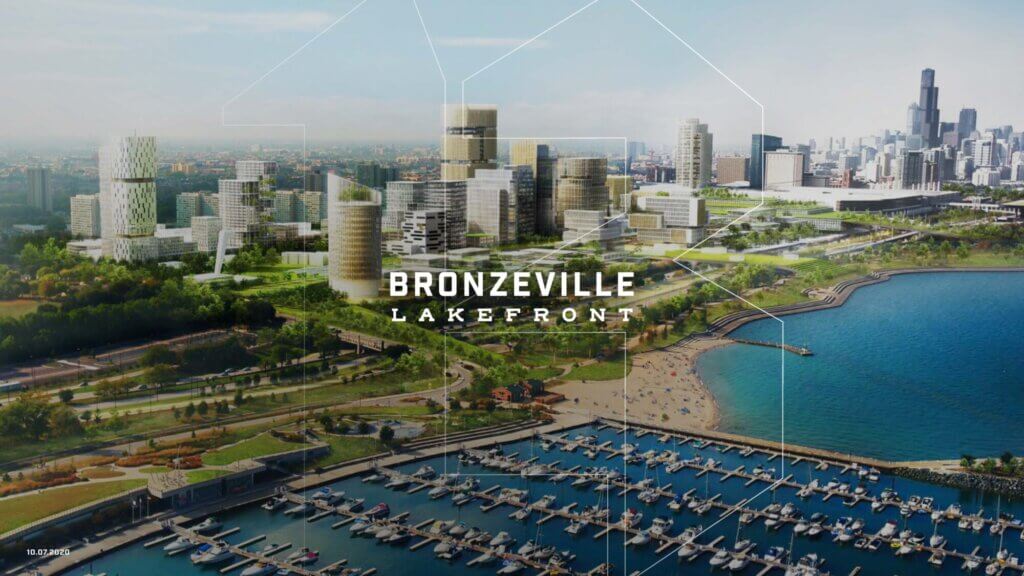
Brand Strategy + Ecosystem Design for Chicago’s $7.5B Health Innovation District

A $7.5B+ Opportunity in One of Chicago's Most Historically Significant Neighborhoods · Brand Strategy, Stakeholder Research, and Pitch Collateral · 100+ Acres. 20% Affordable Housing. A New Metra Stop. 105% Renewable Energy. · Equitable Placemaking at Scale

Marketing Strategy and Execution for One of the Worlds leading Cultural Institutions

Five-Scholar Curation Council. A Months-Long Festival. A Marketing Brief Like No Other. · Audience Research, Influencer Strategy, and Content Production at Cultural Scale · Transmitting an Undefinable Energy to the Right Audiences

Influencer Strategy + Event Marketing for HBO’s Watchmen Launch

HBO's Own Machine Had a Blind Spot · Partnership With consciously · 400+ at the Atlanta Pre-Screening · Comic Con Activation · Content, Events, and Cross-Community Reach

2 Million Reached: Brand + Campaign for Brooklyn Incubator

One of NYC's Biggest Economic Zones and incubator Needed an · Brand Strategy, Web Platform, and #BuildTheFutureNYC Campaign · 2M+ Reach Across Five Boroughs · A Blueprint Other Cities Are Now Following

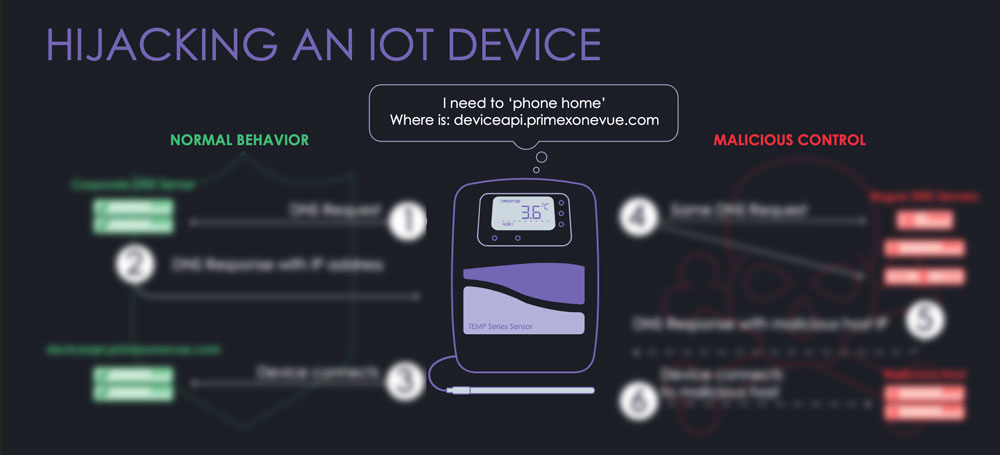
Agency of Record Brand Strategy + Content for Identity Security Leader

Unmatched Technology. No Brand Voice to Match It. · Website Rebuild + Brand Strategy + Content System as Agency of Record · From Legacy Web 1.0 to Thought Leadership Platform · A Company Now Trusted by 30+ Fortune 100 Clients

Brand Strategy + Community Health Outreach for National Telehealth + In-Clinic

Funding Cuts. Then a Pandemic. A 100-Year-Old Organization Needed a New Reach Strategy · Audience Research Across BIPOC, Transgender, and Low-Income Communities · Brand Voice, Go-to-Market, Telehealth Activation, and Geofencing · Awareness, Reach, and Foot Traffic All Showed Marked Improvement

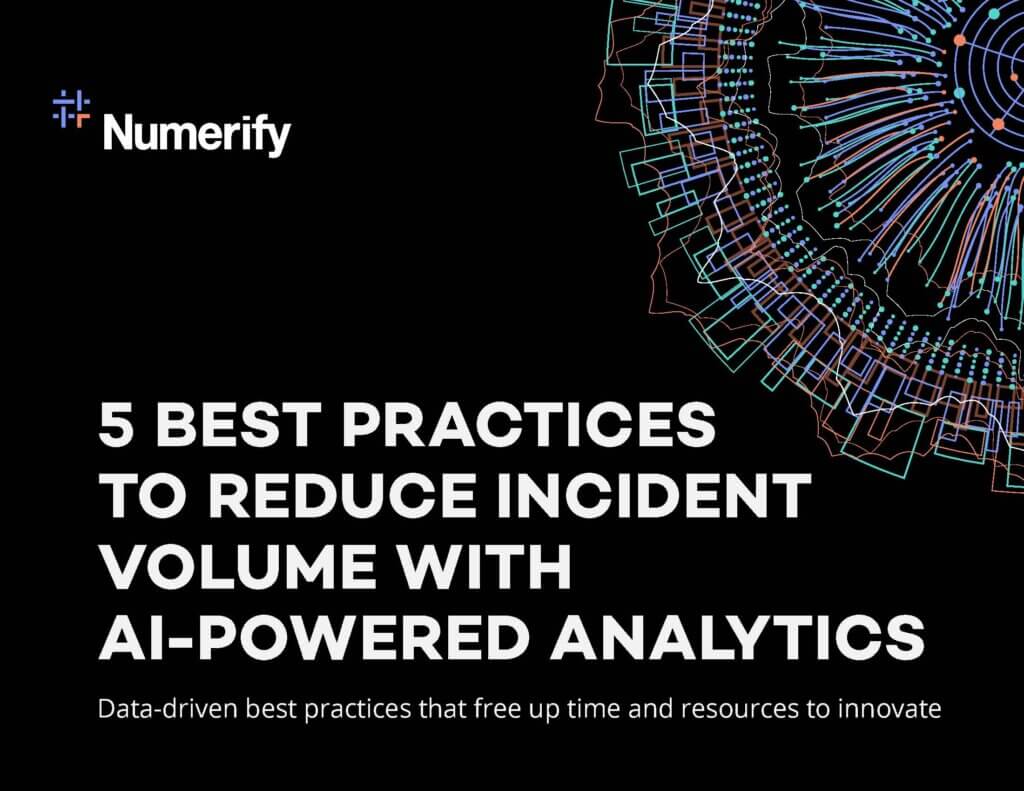
AI Company Using Humans for Content — Numerify

Building a Content Machine for an AI Analytics Company

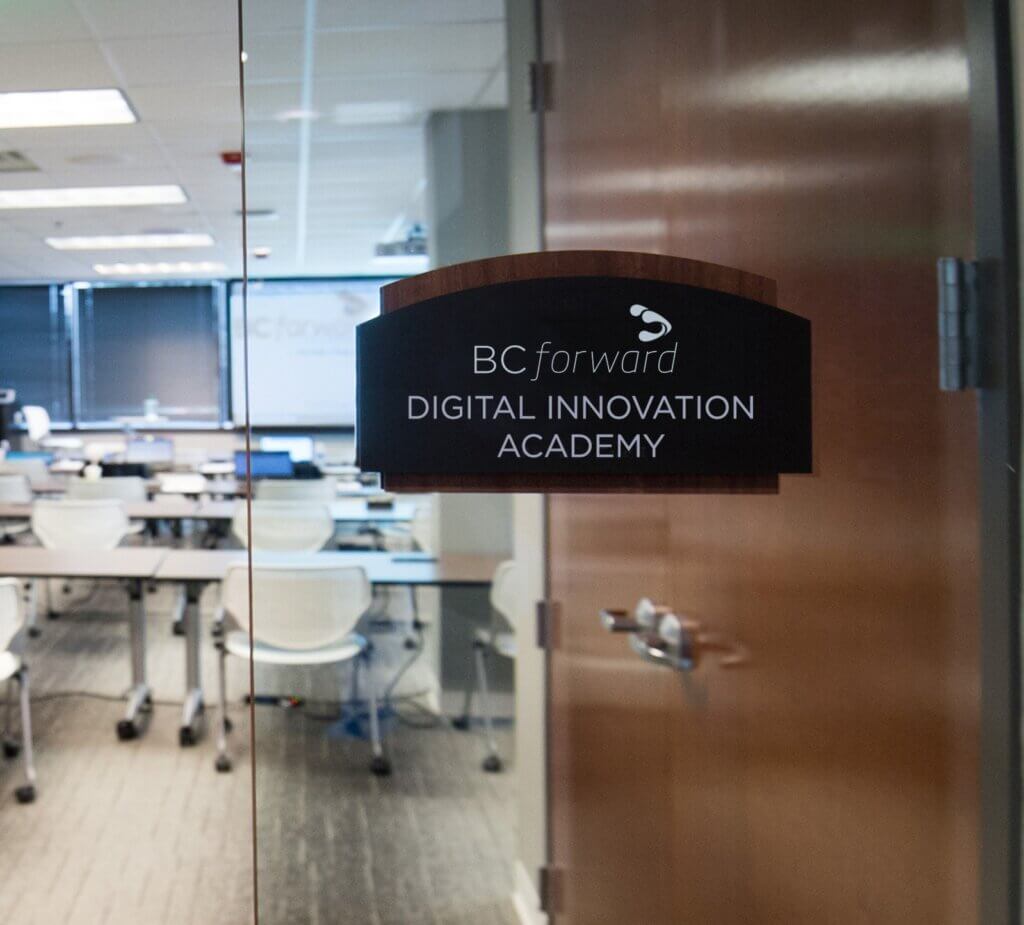
Superbowl Staffing Agency Needs New Thinking — BCforward

Helping an international transformation change agent to define their public expression

Connecticuts’ State Bank Manifests Community — Nutmeg

Connecticuts' State Bank wanted to connect better with it's ecosystem

Making a Theory into Change — B Lab

Working to make business a force for change

National Growth Marketing Campaign for Legacy National Non-profit 

Place-Based Community at National Scale · Ecosystem Activation Across Diverse Stakeholder Groups · What It Means to Market Belonging

Brand Identity Refresh + Marketing That Delivered 10x Engagement 

A Brand Defined by One Name Needed a Voice of Its Own · Identity + Positioning + Campaign Infrastructure · 10x Across Awareness, Reach, and Engagement

Brand Identity + Messaging for a Regulated HealthTech Company

Regulated Spaces Demand Precise Visual and Verbal Systems · Identity Built for Trust Under Scrutiny · Messaging That Works for Both Patients and Providers

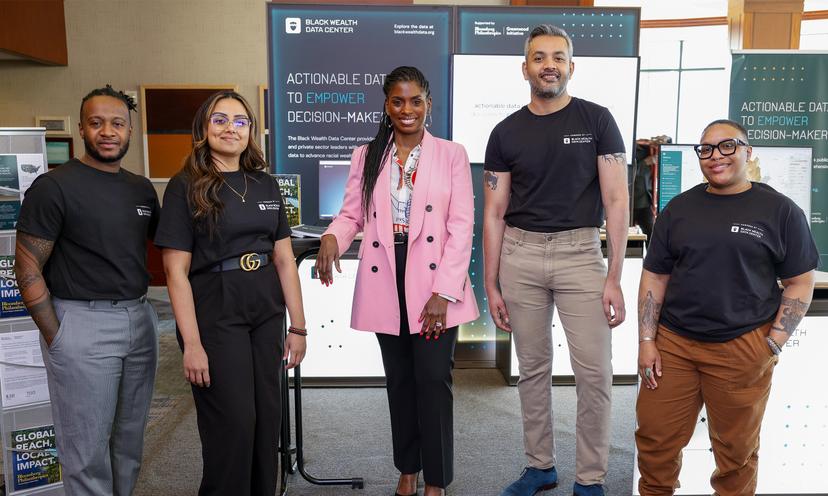
Wealth is About More Than Money

Laying a Foundation for Data-Driven Wealth Equity

Post-Acquisition Brand Unification as Agency of Record

Two Acquisitions. One Year. Millions of Jira Users Watching. · Brand Strategy During a Global Crisis · Agency of Record: Content, Branding, Social, and Brand Anthem · Three Entities. One Cohesive Brand.

Boston Needs Racial Wealth Equity Data — Boston Foundation

Providing resources for grant makers in Boston and the Massachusetts area.

poly-identity

EASI Demographics: Helping One of the Country’s Largest Data Suppliers Look the Part

Three Distinct Buyer Personas. One Coherent Brand. · Rebrand Built for a High-End Client Roster · Ecommerce and Sales Journey Redesign

Aligning Five Acquired Companies Under One Inclusive Brand for Digital Transformation Leader

Post-Acquisition Brand Alignment Across Five Companies · Values Built Into Style Guide and Production Process · Equity as Infrastructure, Not Add-On

National B2G Branding and Content — Cocensus

Laying a Foundation for Data-Driven Wealth Equity