Branding and Ecosystem Design for a Global FinTech Venture Firm
Values-Driven Finance Needs Trust Infrastructure · Stakeholder Mapping Across Institutions and Individuals · An Ecosystem Strategy That Earns Trust at Every Level
Read our insights
Services

Your ecosystem doesn’t wait for your brand. It is already a living, acting thing — players occupying roles, conversations happening in communities, categories being defined by competitors, certifications being awarded, media covering the space, and stakeholders forming opinions — with or without you in the picture.
Ecosystem Intelligence™ is how we map all of it before we build anything. Before a single message is written or a campaign is launched, we need to understand the ecosystem your brand is entering: who the players are, what the signals mean, where the category is being shaped, and what it will take to earn a place of trust within it.
Ecosystem Intelligence starts with the world people already inhabit. It is research at the level of systems, not segments.
Values-Driven Finance Needs Trust Infrastructure · Stakeholder Mapping Across Institutions and Individuals · An Ecosystem Strategy That Earns Trust at Every Level
Read our insightsEvery piece of brand strategy, category design, and marketing activation we build at Consciously® is grounded in Ecosystem Intelligence. You cannot design a Trust Context™ without knowing what trust means in the ecosystem. You cannot design for a category without understanding how it operates. You cannot build stakeholder relationships without knowing who the stakeholders are and what roles they play.
Your marketing platform provides experiences that are smart, secure, dynamic, and integrated with your data — distributing compelling digital experiences for your clients, customers and leads.
Deliverables include: Ecosystem Map with player roles and positions · Category Intelligence Report · Competitor Analysis · Stakeholder Mapping · Ecosystem Signal Documentation · Trust Context™ Foundation · Media and Press Landscape · Place-Based Ecosystem Context
Every brand exists within a network of relationships, competitors, partners, adjacent categories, and the organizations that shape the rules of the space. We map this network comprehensively: who the anchors are, what positions they hold, where the gaps are, and what it would take for your brand to earn a distinct and defensible place.
Categories are not discovered — they are designed. Before you can position your brand within a category, you need to understand how that category currently operates: who defines it, what the shared language is, where it’s heading, and whether it’s a category worth designing for or whether a new one needs to be created. This is the intelligence that informs Category Design.
Every ecosystem has a cast of characters — brands playing category leadership roles, organizations setting certification standards, influencers shaping opinion, media outlets defining the conversation, and communities holding the culture. We identify each player, map their role, and determine how your brand can enter, complement, or challenge the existing ecosystem architecture.
Ecosystem signals are the markers of credibility and belonging within a space — the certifications that confer legitimacy, the hashtags that identify community members, the professional roles that carry authority, the marketplaces where the category transacts. We surface these signals so your brand knows not just what to say but how to demonstrate belonging.
Competitors and stakeholders are not separate from the ecosystem — they are part of it. We research both with the same rigor, mapping what competitors stand for, what gaps they leave, how stakeholders perceive the category, and where the relationships of influence run. This intelligence is the foundation of every Trust Context™ we build.
Ecosystems are not uniform across geographies. The category leadership that holds in New York may not hold in the midwest. The certifications that matter in one market may be irrelevant in another. Our place-based ecosystem research brings location intelligence to every dimension of the mapping, so your brand can be calibrated to the specific contexts where it needs to perform.
Every category has a media layer — publications, podcasts, newsletters, analysts, and journalists who shape how the space is understood. We map the media ecosystem alongside the business ecosystem, identifying where the conversation happens, who drives it, and how your brand can earn a place in it rather than paying for one.
You pay a flat monthly rate – no surprises – and have a highly-skilled, flexible marketing team at your disposal. Hourly rates distract businesses with the amount of hours worked instead of the work being done. A flat rate keeps everyone focused on the goal at hand, and producing the best work with the time and resources available.
We put together a marketing team for you that we call a pod. Instead of using the same staff to execute every job, we find experts whose style and execution match the company’s desired voice and aesthetic. In this way, each pod is unique to the client and so is the output.
We reassess your rate quarterly by evaluating the amount of work to be done and the skill sets necessary to accomplish the goals. By constantly evaluating the landscape, we allow the deliverables to evolve naturally and never be outpaced by the market.
Ecosystem Intelligence IQ™ is Consciously®’s proprietary research practice for mapping the living ecosystem around a brand before strategy is built. It covers the business ecosystem, brand ecosystem, category landscape, ecosystem players and roles, competitors, stakeholders, certifications, media, and place-based context — giving brands a comprehensive map of the world they are entering rather than assumptions about it.
Audience research focuses on reaching people — their demographics, affinities, and behaviors. Ecosystem Intelligence focuses on the system those people inhabit — the players, roles, signals, categories, and relationships that define how trust and credibility work in a given space. Audience research asks “who do we want to reach?” Ecosystem Intelligence asks “what is the world we are entering, and how does it operate?”
Yes. Competitors are ecosystem players, not a separate research category. We map what competitors stand for, what positions they hold, what gaps they leave, and how their presence shapes the category — all as part of the ecosystem map.
We want it to happen before strategy is built but that’s just not always possible, infact a lot of time it’s not. Ecosystem Intelligence™ is the foundation that every other Consciously® practice builds from, Category Design, Ecosystem Design, Brand Strategy, and Trust Context™ all require an accurate map of the ecosystem to be effective.
Deliverables include: Ecosystem Map with player roles, Category Intelligence Report, Competitor Analysis, Stakeholder Mapping, Ecosystem Signal Documentation, Trust Context™ Foundation, Media and Press Landscape, and Place-Based Ecosystem Context.

Branding a New Line of Business Without Losing Legacy Clients · Strategy, Execution, and Product Marketing Under One Roof

A Race That Needed an Identity Before It Had a Name · Naming, Branding, Sponsorship, Website, and Campaign as One System · Built to Grow Year Over Year

A Fintech Platform That Needed to Educate Before It Could Convert · Brand Strategy + Product Design + #AskSustainable Campaign · A Consistent Voice Across Every Channel and Touchpoint
Values-Driven Finance Needs Trust Infrastructure · Stakeholder Mapping Across Institutions and Individuals · An Ecosystem Strategy That Earns Trust at Every Level

A Category Leader Whose Brand Hadn't Caught Up to Its Certifications · Branding, Product Design, and Ecosystem Strategy as One Platform · Webby Award Nominated 2023

An AR Platform Built to Rewrite How We See History · Selected Alongside for MoMA Exhibition · App Launched the Day Trevor Noah Hosted a Town Hall With Will Smith · Branding, Ecosystem Design, Research, and Campaign Strategy

A 15-Year-Old Mentorship Organization Needed a Commercial Platform · Brand Identity, Website, and Performance Marketing · NBA Foundation Inaugural Grant: The Work Got Noticed · Brands Including Moët Hennessy, PepsiCo, AT&T, Google, P&G, and Spotify
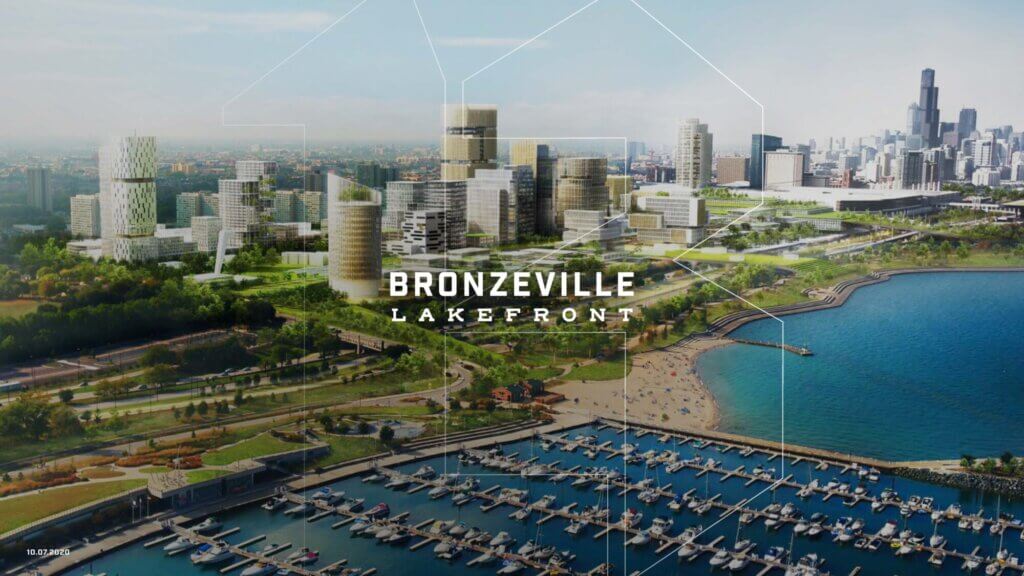
A $7.5B+ Opportunity in One of Chicago's Most Historically Significant Neighborhoods · Brand Strategy, Stakeholder Research, and Pitch Collateral · 100+ Acres. 20% Affordable Housing. A New Metra Stop. 105% Renewable Energy. · Equitable Placemaking at Scale

Five-Scholar Curation Council. A Months-Long Festival. A Marketing Brief Like No Other. · Audience Research, Influencer Strategy, and Content Production at Cultural Scale · Transmitting an Undefinable Energy to the Right Audiences
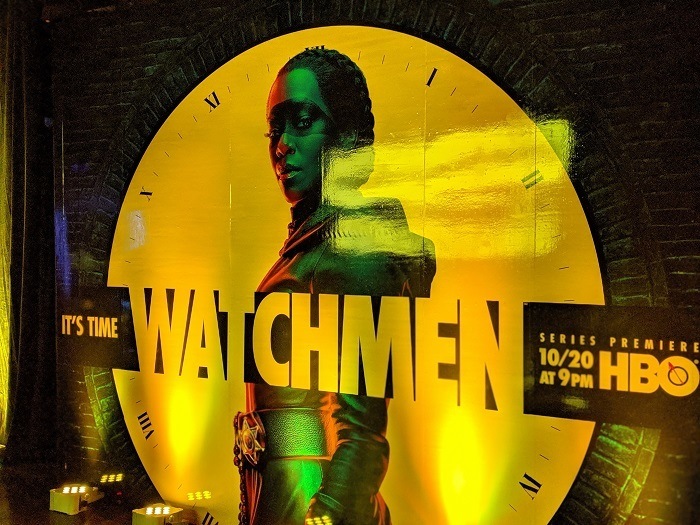
HBO's Own Machine Had a Blind Spot · Partnership With consciously · 400+ at the Atlanta Pre-Screening · Comic Con Activation · Content, Events, and Cross-Community Reach

One of NYC's Biggest Economic Zones and incubator Needed an · Brand Strategy, Web Platform, and #BuildTheFutureNYC Campaign · 2M+ Reach Across Five Boroughs · A Blueprint Other Cities Are Now Following

Unmatched Technology. No Brand Voice to Match It. · Website Rebuild + Brand Strategy + Content System as Agency of Record · From Legacy Web 1.0 to Thought Leadership Platform · A Company Now Trusted by 30+ Fortune 100 Clients

Funding Cuts. Then a Pandemic. A 100-Year-Old Organization Needed a New Reach Strategy · Audience Research Across BIPOC, Transgender, and Low-Income Communities · Brand Voice, Go-to-Market, Telehealth Activation, and Geofencing · Awareness, Reach, and Foot Traffic All Showed Marked Improvement
Building a Content Machine for an AI Analytics Company
Helping an international transformation change agent to define their public expression

Connecticuts' State Bank wanted to connect better with it's ecosystem


Place-Based Community at National Scale · Ecosystem Activation Across Diverse Stakeholder Groups · What It Means to Market Belonging

A Brand Defined by One Name Needed a Voice of Its Own · Identity + Positioning + Campaign Infrastructure · 10x Across Awareness, Reach, and Engagement

Regulated Spaces Demand Precise Visual and Verbal Systems · Identity Built for Trust Under Scrutiny · Messaging That Works for Both Patients and Providers
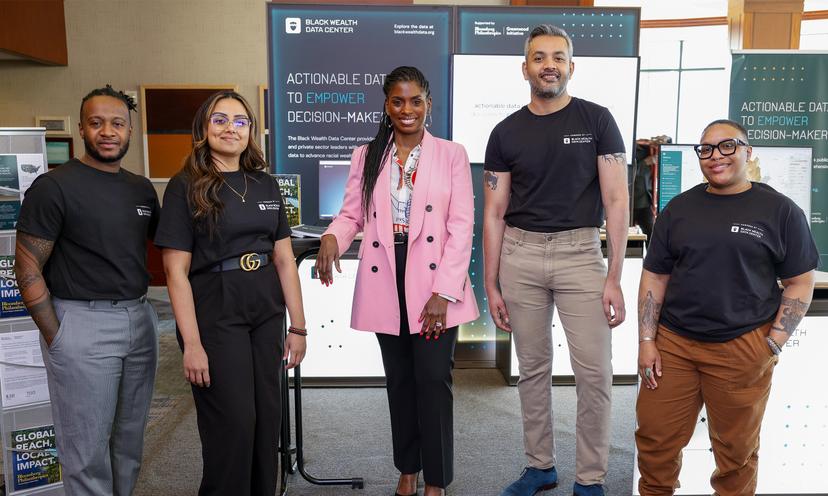

Two Acquisitions. One Year. Millions of Jira Users Watching. · Brand Strategy During a Global Crisis · Agency of Record: Content, Branding, Social, and Brand Anthem · Three Entities. One Cohesive Brand.

Providing resources for grant makers in Boston and the Massachusetts area.

Three Distinct Buyer Personas. One Coherent Brand. · Rebrand Built for a High-End Client Roster · Ecommerce and Sales Journey Redesign

A New Jersey Community focused on equity for more than 50 years

Post-Acquisition Brand Alignment Across Five Companies · Values Built Into Style Guide and Production Process · Equity as Infrastructure, Not Add-On